

Blog
10 Different Types of Biryani You Should Know

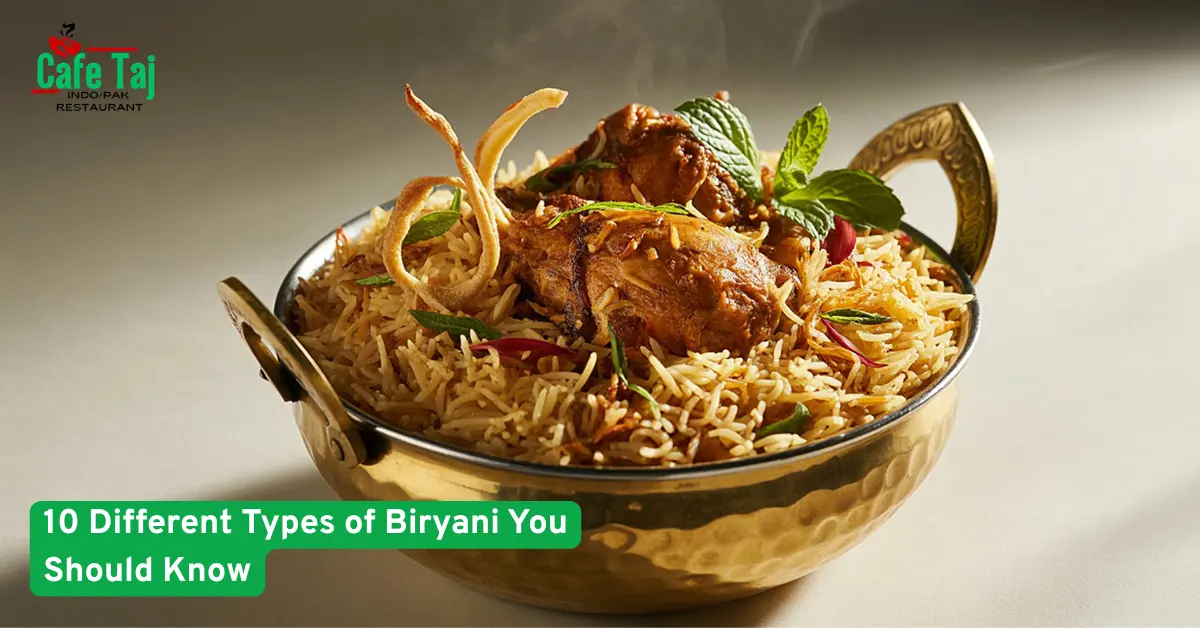
Biryani is more than just a rice dish — it’s a celebration on a plate. Born from the royal kitchens of Mughal emperors and shaped by centuries of regional creativity across South Asia, biryani has evolved into countless variations, each with its own unique spices, cooking style, and story.
From the smoky, saffron-laced biryani of Hyderabad to the fiery, fragrant biryani of Sindh, every region has put its own signature on this iconic dish. Whether you’re a longtime biryani lover or just discovering it, here are 10 different types of biryani you absolutely need to know.
1. Hyderabadi Biryani
Perhaps the most famous biryani of them all, Hyderabadi Biryani originated in the kitchens of the Nizams of Hyderabad. It’s prepared using the traditional dum method — where marinated raw meat and partially cooked basmati rice are layered together and slow-cooked in a sealed pot.
What makes it special: Saffron, mint, fried onions, and a heavy use of yogurt-based marinade. The result is a fragrant, mildly spicy biryani with tender meat that practically melts in your mouth.
Best paired with: Mirchi ka salan and raita.
2. Sindhi Biryani
Hailing from the Sindh province of Pakistan, Sindhi Biryani is bold, spicy, and unapologetically flavorful. It’s a staple at weddings, family gatherings, and even on Pakistani airlines.
What makes it special: A generous use of green chilies, mint, coriander, prunes (aloo bukhara), and yogurt. Potatoes are almost always included, giving it a comforting heartiness.
Best paired with: Cucumber raita and a slice of lemon.
3. Lucknowi (Awadhi) Biryani
From the city of Nawabs comes Lucknowi Biryani, also known as Awadhi Biryani. Unlike the Hyderabadi version, this biryani uses the pukki method — meaning the meat is fully cooked before being layered with the rice.
What makes it special: A delicate, aromatic flavor profile with milder spices, kewra water, and rose essence. It’s subtle, elegant, and refined — the biryani equivalent of fine dining.
Best paired with: Sheermal or a light yogurt salad.
4. Kolkata Biryani
When the last Nawab of Awadh, Wajid Ali Shah, was exiled to Kolkata, his royal cooks adapted the biryani to suit local tastes — and Kolkata Biryani was born.
What makes it special: The signature addition of boiled potatoes and boiled eggs, along with a lighter use of spices. It has a subtle sweetness and a beautiful golden hue from kewra and a touch of sugar.
Best paired with: Chaap or a simple salad.
5. Memoni Biryani
Originating from the Memon community of Gujarat and Sindh, Memoni Biryani is one of the spiciest biryanis you’ll ever taste.
What makes it special: Fewer fried onions, more tomatoes, and a fiery blend of red chilies, yogurt, and aromatic spices. The color is naturally redder, and the flavor is intensely tangy and hot.
Best paired with: Cool yogurt raita to balance the heat.
6. Thalassery Biryani (Malabar Biryani)
A unique gem from the Malabar coast of Kerala, Thalassery Biryani stands apart from its northern cousins.
What makes it special: Instead of long-grain basmati, it uses a short-grain rice called Khyma (or Jeerakasala). The meat is cooked separately and layered with the rice, then garnished with fried cashews, raisins, and onions.
Best paired with: Pappad, lime pickle, and dates chutney.
7. Bombay Biryani
Mumbai’s contribution to the biryani world, Bombay Biryani is bold, tangy, and packed with personality.
What makes it special: A unique sweet-and-tangy flavor from kewra water, dried plums, and a mix of warm spices. Potatoes are deep-fried before being added, giving them a crispy edge.
Best paired with: Mint-coriander chutney and onion salad.
8. Dindigul Biryani
From the small town of Dindigul in Tamil Nadu comes a biryani that food lovers travel hours to taste. Dindigul Biryani is unlike any other South Indian biryani.
What makes it special: It uses seeraga samba rice (a tiny, fragrant short-grain rice) instead of basmati. The use of curd and lemon gives it a distinctive tang, while the spices remain bold and earthy.
Best paired with: Brinjal curry and onion raita.
9. Ambur Biryani
Another Tamil Nadu favorite, Ambur Biryani has its roots in the Nawabs of Arcot. It’s known for being lighter on spices but heavy on flavor.
What makes it special: Seeraga samba rice, minimal use of garam masala, and a strong infusion of ginger-garlic and chili paste. The meat-to-rice ratio is generous, and the flavor is refreshingly clean.
Best paired with: Dhalcha (lentil curry) and brinjal pachadi.
10. Kacchi Biryani
A signature dish of Bangladesh, Kacchi Biryani is the Hyderabadi style’s close cousin — but with its own unique character.
What makes it special: Raw marinated mutton (kacchi means “raw”) is layered with par-cooked rice and slow-cooked together with potatoes, ghee, and a special blend of spices. The result is incredibly tender meat infused into every grain of rice.
Best paired with: Borhani (a spiced yogurt drink) and salad.
What Makes Each Biryani Unique?
While all biryanis share the same basic concept — meat (or vegetables) and rice cooked together with spices — the differences lie in:
- The rice: Basmati, seeraga samba, or khyma
- The cooking method: Dum (sealed pot) vs. pukki (pre-cooked)
- The spice profile: Mild and aromatic vs. fiery and bold
- Regional ingredients: Prunes, potatoes, eggs, cashews, or saffron
- The accompaniments: Raita, salan, chutneys, or curries
Each version tells a story of its region, its people, and its history.
Frequently Asked Questions (FAQs)
1. What is the oldest type of biryani?
While the exact origin is debated, biryani is widely believed to have been brought to the Indian subcontinent by the Mughals in the 16th century. Hyderabadi Biryani and Lucknowi Biryani are among the oldest documented styles, both originating from royal Mughal kitchens.
2. Which biryani is the spiciest?
Memoni Biryani and Sindhi Biryani are generally considered the spiciest, thanks to their generous use of green and red chilies, along with bold spice blends.
3. What’s the difference between biryani and pulao?
The biggest difference is in the cooking method. Biryani is typically cooked in layers (rice and meat cooked separately, then combined), while pulao is cooked together in one pot. Biryani is also more heavily spiced and aromatic.
4. Which biryani is best for beginners?
Lucknowi Biryani or Kolkata Biryani are excellent starting points. Both are mild, aromatic, and easy on the palate, making them perfect for those new to biryani.
5. Is biryani always made with meat?
Not at all! While traditional biryanis feature chicken, mutton, beef, or fish, vegetable biryani is also extremely popular. It uses the same spices and cooking technique with paneer, potatoes, carrots, peas, and other vegetables.
6. What kind of rice is best for biryani?
Long-grain basmati rice is the most popular choice for most biryanis because of its fluffy texture and ability to absorb flavors. However, South Indian biryanis like Dindigul and Ambur use seeraga samba, while Malabar biryani uses Khyma rice.
7. Why does authentic biryani take so long to make?
Authentic biryani uses the dum cooking method, where the pot is sealed and slow-cooked over low heat. This allows the flavors to develop deeply and the meat to become incredibly tender. Rushing the process compromises both flavor and texture.
8. What’s the best biryani to try in Houston?
If you’re in Houston and want to taste authentic Pakistani-style biryani, Cafe Taj offers some of the best Chicken Biryani in the city — slow-cooked, fragrant, and packed with flavor. We also feature exclusive Buy 1 Get 1 Free deals on biryani regularly.
Craving Authentic Biryani in Houston? Visit Cafe Taj Today!
There’s no better way to experience the magic of biryani than tasting it fresh, hot, and prepared by chefs who honor tradition. At Cafe Taj, we serve authentic Chicken Biryani made with premium basmati rice, fresh halal meat, and our signature blend of spices — slow-cooked to perfection.
Don’t miss our Buy 1 Get 1 Free Chicken Biryani deal!
📍 Visit us: 10730 W Bellfort Ave, Houston, TX 77099 📞 Call: (281) 272-6605 🍽️ Order Online: cafetaj.net/menu
👉 Order Your Biryani Now and taste the tradition that’s loved across South Asia and beyond!