

Blog
What Is Haleem? Ingredients, Cooking Style and Traditional Flavors

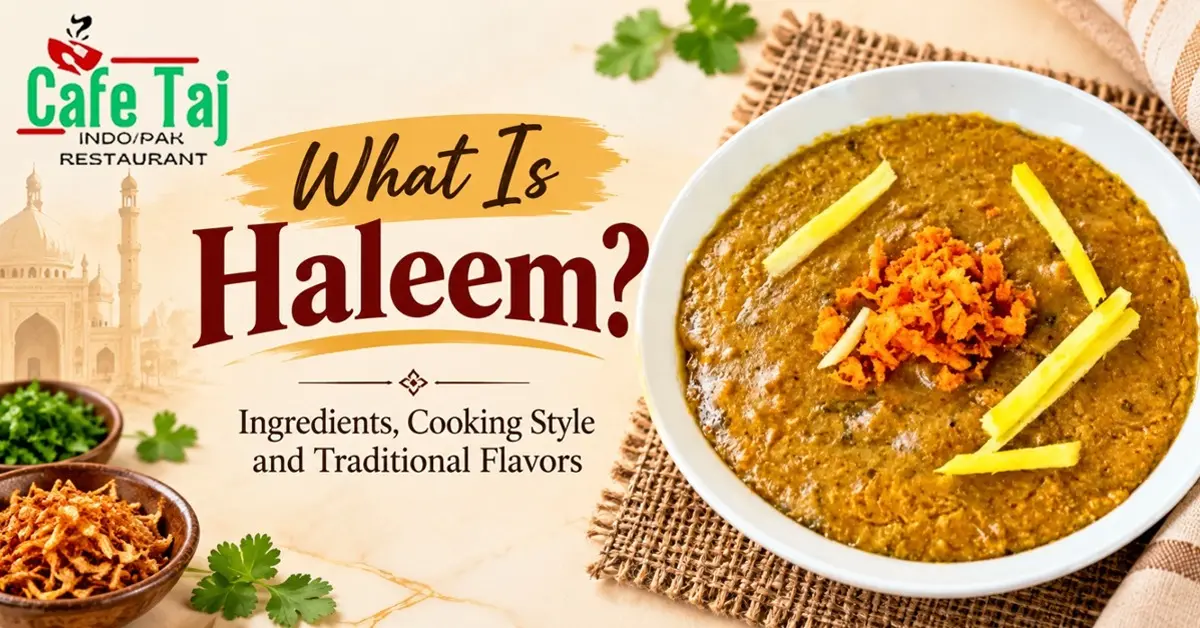
Some Pakistani dishes are loved for their bold spices, while others are remembered for their comforting texture and slow-cooked richness. Haleem brings both qualities together. This traditional South Asian dish combines tender meat, lentils, wheat, and aromatic spices into a thick, satisfying meal that has become a favorite in Pakistani households and restaurants.
Haleem is especially popular during Ramadan, family gatherings, and special occasions, although many people enjoy it throughout the year. Its distinctive texture and deeply developed flavors make it different from everyday curries and stews.
For food lovers exploring Pakistani cuisine in Houston, Texas, Haleem offers an opportunity to experience one of South Asia’s most recognizable slow-cooked specialties.
But what exactly is Haleem, what ingredients go into it, and why does its preparation require so much patience?
What Is Haleem?
Haleem is a traditional slow-cooked dish made with meat, wheat, lentils, and a blend of aromatic spices. The ingredients are cooked until soft and then blended or vigorously stirred to create a thick, smooth, and slightly fibrous consistency.
Unlike conventional meat curries, Haleem does not typically feature large, separate pieces of meat in a thin gravy. Instead, the meat fibers become incorporated into the grain-and-lentil mixture.
The result is a hearty dish with a distinctive texture and rich, savory flavor.
Haleem is particularly associated with Pakistani cities such as Karachi and Lahore, where it is enjoyed as a popular comfort food.
Different regions have their own versions, and the dish is also closely related to other slow-cooked meat-and-grain preparations found across South Asia and the Middle East.
What Ingredients Are Used in Traditional Haleem?
The defining characteristic of Haleem is its combination of meat, grains, lentils, and spices.
Although recipes vary, traditional Pakistani Haleem commonly contains the following ingredients.
1. Meat
Beef, goat, mutton, or chicken may be used, depending on the recipe.
The meat is cooked until tender enough to shred and blend into the mixture. Its natural juices contribute savory depth and richness.
2. Wheat and Grains
Broken wheat, sometimes called dalia, is a key ingredient in many Haleem recipes.
As it cooks, the wheat softens and helps create the dish’s characteristic thick texture. Some recipes also incorporate barley.
3. Lentils
A combination of lentils gives Haleem additional body and an earthy flavor.
Common varieties include:
- Chana dal (split chickpeas)
- Masoor dal (red lentils)
- Moong dal (split mung beans)
- Urad dal (black gram)
Not every recipe uses all four varieties.
4. Aromatic Spices
Traditional Haleem commonly features cumin, coriander, turmeric, red chili powder, black pepper, cinnamon, cloves, and cardamom.
Ginger, garlic, and onions also help build its flavor.
5. Garnishes
Haleem is often served with crispy fried onions, fresh cilantro, ginger strips, green chilies, and lemon wedges.
These garnishes add freshness, texture, and brightness to the rich dish.
How Is Traditional Pakistani Haleem Prepared?
Haleem is famous for its lengthy cooking process. Its signature texture cannot be achieved simply by combining cooked meat and lentils.
Step 1: Cooking the Wheat and Lentils
Wheat and lentils are soaked when necessary and then cooked until very soft.
This creates the thick base that gives Haleem its consistency.
Step 2: Preparing the Meat
The meat is cooked separately or together with the spices, depending on the recipe.
Onions, ginger, garlic, and aromatic seasonings are used to develop a flavorful mixture.
Step 3: Combining the Ingredients
Once the meat, grains, and lentils become tender, they are combined.
The mixture is stirred, mashed, or blended until the ingredients develop a cohesive texture.
Step 4: Slow Cooking and Finishing
The Haleem is simmered further while being stirred regularly.
This process allows the flavors to blend and the meat fibers to distribute throughout the mixture.
Traditional preparation can take several hours, although modern pressure cookers and commercial equipment may shorten the process.
What Does Haleem Taste Like?
Haleem has a rich, savory, earthy, and warmly spiced flavor.
The meat contributes depth, while the wheat and lentils create a hearty foundation. Spices add warmth and aroma without necessarily making the dish extremely hot.
Its texture is one of its most distinctive qualities.
Properly prepared Haleem is thick and cohesive, with fine strands of tender meat distributed throughout the mixture.
Unlike a typical curry, Haleem is usually eaten as a substantial dish rather than as meat pieces surrounded by gravy.
Fresh lemon juice can brighten the flavors, while fried onions add a pleasant contrast to its soft texture.
Haleem vs Nihari: What’s the Difference?
Haleem and Nihari are two beloved Pakistani slow-cooked dishes, but they differ significantly in their ingredients and textures.
| Feature | Haleem | Nihari |
| Main ingredients | Meat, wheat, lentils, spices | Meat, spices, stock |
| Texture | Thick, blended, slightly fibrous | Smooth gravy with tender meat pieces |
| Cooking style | Slow-cooked and repeatedly stirred | Slowly simmered as a stew |
| Flavor | Earthy, savory, warmly spiced | Rich, meat-forward, aromatic |
| Common accompaniments | Fried onions, lemon, naan | Ginger, lemon, naan |
Both dishes reflect the importance of slow cooking in Pakistani cuisine. If you’re interested in traditional meat-based comfort food, Cafe Taj’s guide to Aloo Gosht explores another classic Pakistani preparation.
What Is the Difference Between Beef Haleem and Goat Haleem?
The meat used can influence Haleem’s overall taste.
Beef Haleem generally develops a robust, savory flavor. Beef can provide a hearty meat character that complements the earthy lentils and wheat.
Goat Haleem offers a different, distinctive meat flavor that pairs well with traditional Pakistani spices.
Both versions follow the same basic principle: slowly cooking meat, grains, and lentils until they develop a unified texture.
Cafe Taj has featured Haleem among its traditional Pakistani specialties, and its previously shared product sitemap includes Goat Haleem.
Customers should check the current Cafe Taj menu for available Haleem varieties before ordering.
What Is Traditionally Served With Haleem?
Haleem is often enjoyed as a complete meal, but traditional accompaniments enhance its flavors.
Fresh naan or roti can be used to scoop up the thick mixture. Crispy fried onions add crunch, while lemon juice provides a refreshing tangy contrast.
Fresh ginger strips, cilantro, and sliced green chilies are also common garnishes.
Some people prefer Haleem with additional fried onions and lemon, while others enjoy it with minimal toppings to appreciate the natural flavor of the meat and lentils.
For anyone new to Pakistani cuisine, Cafe Taj’s beginner’s guide to Indian and Pakistani food offers a useful introduction to traditional dishes and dining customs.
Why Is Haleem Popular During Ramadan?
Haleem is particularly popular during Ramadan because it is hearty, flavorful, and well suited to communal meals.
In many Pakistani households, Haleem is served during iftar, the evening meal that breaks the daily fast.
Its combination of grains, lentils, and meat makes it a substantial dish that can be prepared in large quantities for families and gatherings.
Haleem is also associated with community food traditions, where large pots are prepared and shared among relatives, neighbors, and guests.
Although Ramadan is an important occasion for enjoying Haleem, the dish remains popular throughout the year.
Where to Find Haleem in Houston, TX
Houston’s diverse food scene offers opportunities to discover traditional Pakistani dishes beyond familiar favorites such as biryani and chicken tikka.
For diners in Southwest Houston, Alief, Sharpstown, and nearby neighborhoods, Haleem provides an introduction to a distinctive part of Pakistani food culture.
Cafe Taj Indo Pak Restaurant, located at 10730 W Bellfort Ave, Houston, TX 77099, serves halal Pakistani and Indian cuisine. Its website identifies Haleem among its traditional specialties.
Visitors can explore the restaurant’s menu and ask about current Haleem options, portion sizes, and availability.
Frequently Asked Questions About Haleem
1. What is Haleem made of?
Traditional Pakistani Haleem is made with meat, wheat, lentils, aromatic spices, onions, ginger, and garlic. Recipes vary by region and household.
2. Is Haleem a soup or a curry?
Haleem is best described as a thick, slow-cooked meat, grain, and lentil dish. Its texture is usually much thicker than soup and more blended than a conventional curry.
3. Is Haleem spicy?
Haleem is generally warmly spiced, but its heat level depends on the recipe. Some versions are mild, while others contain additional chili.
4. Is Haleem gluten-free?
Traditional Haleem usually contains wheat and is therefore not gluten-free. Anyone avoiding gluten should check the ingredients and cross-contact practices before ordering.
5. Does Cafe Taj serve Haleem in Houston?
Cafe Taj identifies Haleem among its Pakistani food specialties. Customers can check the current menu or contact the restaurant to confirm which varieties are available.
Experience Traditional Pakistani Haleem at Cafe Taj Houston
Haleem represents the patience, flavor, and shared food traditions that make Pakistani cuisine special. Its combination of tender meat, wheat, lentils, and aromatic spices creates a comforting dish with a texture unlike ordinary curries.
Whether you’re discovering Haleem for the first time or craving a familiar Pakistani favorite, Cafe Taj offers an opportunity to explore traditional halal Indo-Pak cuisine in Houston.
Visit Cafe Taj Indo Pak Restaurant at 10730 W Bellfort Ave, Houston, TX 77099, or explore the Cafe Taj menu to discover Haleem and other Pakistani specialties. Check current availability before ordering.