
Blog
What Is Goat Paya? A Traditional Pakistani Breakfast Dish Explained

Pakistani cuisine is famous for its flavorful curries, aromatic rice dishes, and traditional breakfast specialties. Among these dishes, Goat Paya holds a special place because of its rich broth, tender textures, and deeply rooted culinary traditions.
Unlike everyday meat curries, Goat Paya is prepared using goat trotters, which are slowly cooked with aromatic spices until the broth develops a distinctive richness. This traditional Pakistani dish is particularly popular during weekend breakfasts, family gatherings, and special occasions.
For food lovers exploring authentic Pakistani cuisine in Houston, Texas, Goat Paya offers a unique experience that reflects generations of South Asian cooking traditions.
But what exactly is Goat Paya, why does it take so long to prepare, and what makes it different from other Pakistani breakfast dishes? Let’s explore.
What Is Goat Paya?
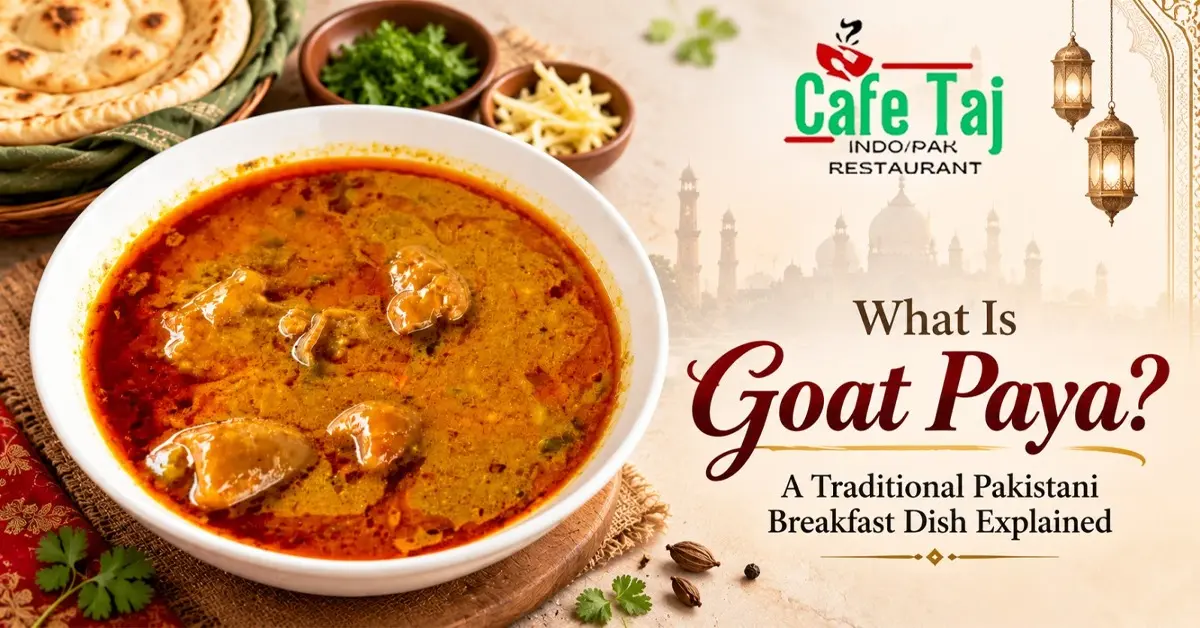
Goat Paya is a traditional Pakistani stew made from goat trotters (feet), aromatic spices, and a slow-cooked broth. The word paya refers to feet or trotters, which are the main ingredient in this distinctive dish.
Unlike conventional meat curries that feature large pieces of boneless or bone-in meat, Goat Paya focuses on the natural gelatin released from the trotters during extended cooking.
This creates a rich, slightly sticky broth with a smooth, substantial mouthfeel.
Traditional Goat Paya is commonly prepared with onions, ginger, garlic, and spices such as cumin, coriander, turmeric, and garam masala.
The finished dish is typically served hot with naan, allowing diners to enjoy every spoonful of its flavorful gravy.
Why Is Goat Paya a Traditional Pakistani Breakfast?
Goat Paya has long been associated with breakfast and brunch in Pakistan, particularly in cities such as Lahore, where hearty morning meals are part of the local food culture.
In many households, the dish is prepared the evening before or cooked overnight because the trotters require extended simmering to become tender.
By morning, the broth has developed its signature texture and aroma.
Goat Paya is especially popular during weekends, holidays, and family gatherings, when people have more time to enjoy a leisurely breakfast together.
Although traditionally associated with mornings, Paya is also enjoyed at lunch or dinner.
Its cultural significance goes beyond the ingredients. Sharing a pot of freshly cooked Paya with family reflects the hospitality and communal dining traditions found throughout Pakistani cuisine.
What Ingredients Are Used in Goat Paya?
The ingredients in Goat Paya are relatively simple, but the cooking technique transforms them into a deeply flavorful dish.
Common ingredients include:
- Goat trotters: The main ingredient, providing gelatin and a rich broth.
- Onions: Add sweetness and depth to the gravy.
- Ginger and garlic: Create an aromatic foundation.
- Cumin and coriander: Contribute warm, earthy flavors.
- Turmeric: Adds color and a subtle earthy taste.
- Red chili powder: Provides heat according to preference.
- Garam masala: Adds additional aromatic complexity.
- Black pepper: Contributes gentle warmth.
- Water or stock: Forms the base of the broth.
Some recipes also include cloves, cinnamon, cardamom, or other whole spices.
Fresh cilantro, green chilies, ginger strips, and lemon wedges may be used as garnishes.
The exact combination varies between Pakistani households and regional cooking styles.
How Is Traditional Goat Paya Prepared?
Preparing Goat Paya requires patience because the trotters need time to release their natural gelatin and develop tenderness.
1. Cleaning and Preparing the Trotters
The goat trotters are thoroughly cleaned and prepared before cooking. Proper cleaning is an essential step in traditional Paya preparation.
2. Building the Spice Base
Onions, ginger, garlic, and spices are cooked to develop a flavorful foundation.
Depending on the recipe, the trotters may be added directly to this mixture or simmered separately before being combined with the masala.
3. Slow-Cooking the Goat Paya
The trotters are simmered in water or stock over low heat for several hours.
During cooking, collagen from the connective tissues gradually converts into gelatin, giving the broth its distinctive body and texture.
Some modern kitchens use pressure cookers to reduce preparation time, although traditional slow simmering remains strongly associated with the dish.
4. Finishing and Serving
Once the trotters become tender and the broth develops its rich consistency, the dish is adjusted for seasoning.
It may be garnished with fresh ginger, cilantro, green chilies, or lemon before serving.
What Does Goat Paya Taste Like?
Goat Paya has a rich, savory, aromatic, and deeply satisfying flavor.
Its most distinctive characteristic is the texture of the broth. Because the trotters contain collagen-rich connective tissues, slow cooking produces a naturally gelatinous consistency.
The spices contribute warmth and complexity without necessarily making the dish extremely hot.
Unlike a thick tomato-based curry, Goat Paya often has a more broth-focused character.
The combination of savory stock, traditional Pakistani spices, and tender connective tissue creates a distinctive dining experience.
For anyone who enjoys slow-cooked meat dishes, Goat Paya offers a different side of Pakistani comfort food.
Goat Paya vs Beef Nihari: What’s the Difference?
Goat Paya and Beef Nihari are both traditional Pakistani dishes associated with hearty breakfasts, but they use different ingredients and cooking techniques.
| Feature | Goat Paya | Beef Nihari |
| Main ingredient | Goat trotters | Beef, often shank |
| Cooking method | Slow-simmered to extract gelatin | Slow-cooked until beef becomes tender |
| Gravy texture | Brothy, naturally gelatinous | Rich, thick, and silky |
| Flavor | Savory and aromatic | Deeply spiced and meat-rich |
| Traditional serving | Naan or roti | Naan or roti |
Both dishes represent the importance of slow cooking in Pakistani cuisine.
While Nihari is celebrated for its tender beef and complex spice blend, Paya stands out because of its distinctive broth and traditional use of trotters.
What Is Traditionally Served With Goat Paya?
Goat Paya is most commonly enjoyed with freshly prepared naan or other traditional South Asian breads.
The soft bread helps absorb the rich broth, making it an essential part of the dining experience.
Popular accompaniments include fresh cilantro, ginger strips, lemon wedges, sliced onions, and green chilies.
Some diners also enjoy Paya with traditional Pakistani breakfast breads.
If you’re exploring the variety of Pakistani food, Cafe Taj’s beginner’s guide to Indian and Pakistani cuisine provides a useful introduction to traditional dishes and flavors.
Where to Find Goat Paya in Houston, TX
Houston is home to a diverse South Asian food community, and traditional dishes such as Goat Paya are part of the city’s Pakistani dining culture.
Located at 10730 W Bellfort Ave, Houston, TX 77099, Cafe Taj Indo Pak Restaurant offers a selection of halal Pakistani and Indian dishes.
Goat Paya appears in Cafe Taj’s previously shared product sitemap, alongside other traditional meat specialties.
Customers interested in trying this dish can explore the Cafe Taj menu and confirm current availability before visiting.
Frequently Asked Questions About Goat Paya
1. What part of the goat is used in Paya?
Goat Paya is made using goat trotters, or feet, which contain bones, skin, and connective tissues that produce a rich broth during cooking.
2. Is Goat Paya spicy?
Goat Paya can be mildly or moderately spicy depending on the recipe. Its defining flavor comes from the broth and aromatic spices rather than chili heat alone.
3. Why does Goat Paya take so long to cook?
The trotters contain collagen-rich connective tissues that require extended cooking to soften and release gelatin into the broth.
4. Is Goat Paya the same as Nihari?
No. Goat Paya is prepared with trotters and has a naturally gelatinous broth, while Nihari is traditionally a slow-cooked meat stew with a different spice blend and gravy texture.
5. Can Goat Paya be eaten for dinner?
Yes. Although traditionally associated with Pakistani breakfast and brunch, Goat Paya can be enjoyed for lunch or dinner as well.
Experience Traditional Pakistani Goat Paya at Cafe Taj Houston
Goat Paya is more than a traditional breakfast dish. It represents the slow-cooking techniques, aromatic spices, and family food traditions that make Pakistani cuisine distinctive.
From its richly flavored broth to its comforting warmth, Goat Paya offers an authentic introduction to a lesser-known side of South Asian cooking.
If you’re in Houston and interested in traditional Pakistani dishes, visit Cafe Taj Indo Pak Restaurant at 10730 W Bellfort Ave, Houston, TX 77099.
Explore the Cafe Taj website to browse the menu, discover other halal Indo-Pak specialties, and check Goat Paya availability before ordering.