
Blog
What Is Chapli Kebab? Peshawar’s Famous Spiced Patty

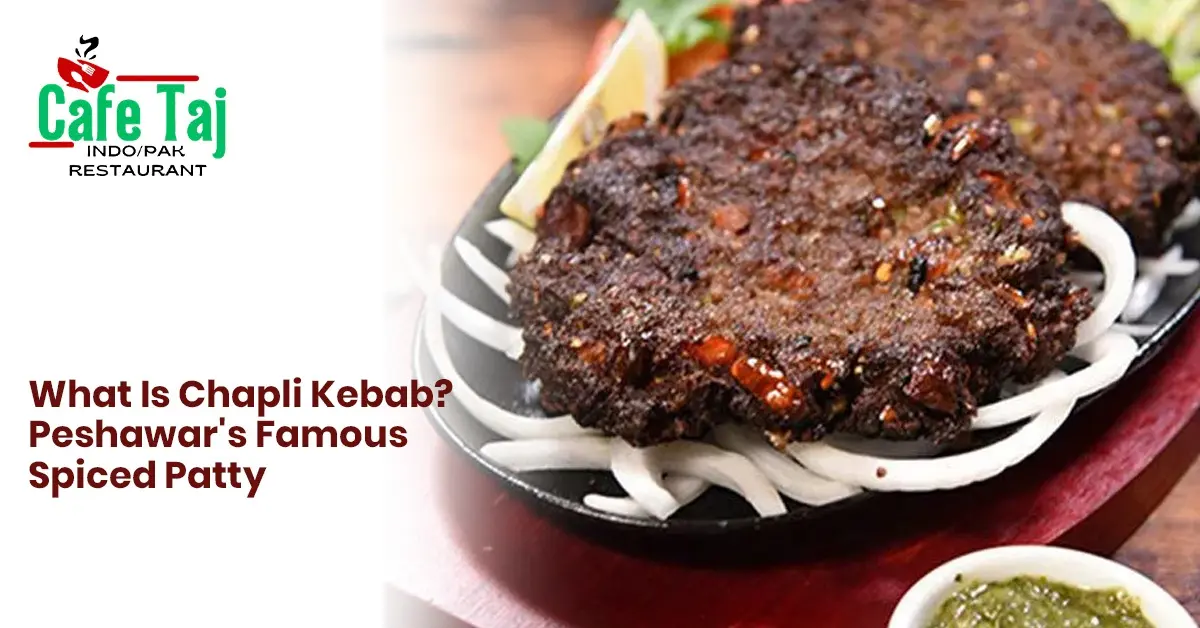
Crispy around the edges, juicy in the center, and packed with herbs and aromatic spices, Chapli Kebab is one of the most recognizable dishes from Pakistan’s northwest. Unlike kebabs shaped around skewers, Chapli Kebab is formed into a broad, flat patty and traditionally cooked on a hot griddle or pan.
The dish is especially associated with Peshawar and the wider Khyber Pakhtunkhwa region of Pakistan, where it has long been part of the local food culture. Today, its popularity extends far beyond Peshawar. You can find versions of Chapli Kebab across Pakistan and in Pakistani communities around the world.
For Houston diners exploring authentic Pakistani food, understanding Chapli Kebab is also a great introduction to the diversity of kebabs found across South Asian cuisine.
What Is Chapli Kebab?
Chapli Kebab is a Pakistani-style minced meat patty seasoned with spices, herbs, and other flavorful ingredients before being flattened and cooked until browned.
Traditional recipes vary from cook to cook, but the mixture commonly includes minced meat along with ingredients such as coriander, cumin, green chilies, onion, tomato, ginger, and fresh herbs. Some recipes also incorporate crushed coriander seeds and other regional seasonings.
What makes it distinctive is the combination of its rustic shape, coarse texture, bold seasoning, and browned exterior.
If you’re new to the wider cuisine, our beginner’s guide to Indian and Pakistani food provides a helpful introduction to the flavors and dishes commonly found on an Indo-Pak menu.
Why Is It Called Chapli Kebab?
There are different explanations surrounding the name, but it is commonly associated with the kebab’s characteristic flat shape.
Rather than being rolled into a cylinder like seekh kebab, the seasoned minced meat is pressed into a relatively thin, round patty. This creates more surface contact with the cooking pan, helping develop the browned, slightly crisp exterior for which Chapli Kebab is known.
That shape is not just visual—it plays an important role in the eating experience.
Where Did Chapli Kebab Originate?
Chapli Kebab is strongly identified with Peshawar, the capital of Pakistan’s Khyber Pakhtunkhwa province.
Peshawari cuisine is known for meat-centered dishes that allow the flavor of the meat to remain prominent while using spices and aromatics to add depth. Over time, Chapli Kebab became popular beyond Peshawar and spread throughout Pakistan.
It is now enjoyed at restaurants, roadside eateries, family gatherings, and celebrations.
For diners in Houston, dishes like Chapli Kebab offer something beyond simply trying another kebab—they provide a taste of a particular regional Pakistani food tradition.
What Does Chapli Kebab Taste Like?
Chapli Kebab generally has a savory, aromatic, meaty, and moderately spiced flavor.
Coriander and cumin contribute earthy and citrusy notes, while green chilies can provide heat. Onion, tomato, ginger, and fresh herbs add freshness and moisture to the meat mixture.
Its texture is just as important as its seasoning. Proper cooking creates contrast between the browned outside and the tender, juicy interior.
However, there is no single universal Chapli Kebab recipe. Spice combinations, meat choices, thickness, and cooking methods can differ between regions, restaurants, and families.
Chapli Kebab vs. Seekh Kebab: What’s the Difference?
Both belong to the broad family of South Asian kebabs, but they aren’t the same dish.
Chapli Kebab is made as a wide, flattened minced-meat patty and is commonly cooked on a griddle or pan. Its mixture can contain visibly textured herbs, spices, onions, chilies, and tomatoes.
Seekh Kebab, meanwhile, is seasoned minced meat shaped lengthwise around a skewer and grilled. This gives it a completely different shape, texture, and cooking style.
Cafe Taj’s current halal grilled menu in Houston includes Chicken Seekh Kabab and Beef Seekh Kabab alongside Chicken Tikka, Chicken Malai Boti, Goat Chops, and the Taj Mix Grill Platter.
Understanding these differences is useful for anyone exploring Pakistani barbecue and grilled food for the first time.
How Is Chapli Kebab Traditionally Prepared?
Preparation begins with minced meat. The meat is mixed with herbs, aromatics, and spices until the ingredients are evenly distributed.
Depending on the recipe, seasonings may include:
- Crushed coriander seeds
- Cumin
- Green chilies
- Onion
- Tomato
- Ginger
- Fresh cilantro
- Black pepper and other spices
The mixture is divided into portions and flattened into broad patties. They are then cooked over a hot surface until the exterior develops its characteristic color and texture while the inside remains moist.
The exact recipe is part of what gives different Chapli Kebabs their personality.
What Do You Eat With Chapli Kebab?
Chapli Kebab works particularly well with simple accompaniments that complement rather than hide its seasoning.
Fresh naan is an obvious choice. Raita can provide a cool contrast, while chutney introduces herbal or tangy flavors. Fresh onion, tomato, cucumber, and lemon can brighten a rich meat dish.
If you enjoy building a traditional Pakistani-style meal, Cafe Taj’s selection of naan, paratha and chapati offers several breads designed to accompany curries and grilled dishes.
Chapli Kebab can also be served as part of a larger spread with rice, salad, chutneys, and other grilled meats.
Why Is Chapli Kebab Important to Pakistani Cuisine?
Pakistani food cannot be represented by a single curry, rice dish, or kebab. Different regions have their own ingredients, techniques, and specialties.
Chapli Kebab helps tell the story of Peshawari and Pashtun food traditions and demonstrates how minced meat, herbs, spices, and straightforward cooking can produce an intensely flavorful dish.
That’s also why learning about regional dishes matters. Someone who knows Pakistani cuisine only through biryani or chicken curry is seeing just one part of a much larger culinary landscape.
For Houston food lovers interested in exploring more of those flavors, Cafe Taj’s Indian and Pakistani restaurant menu brings together biryani and pulao, grilled meats, karahi, breads, vegetarian dishes, desserts, chai and other Indo-Pak favorites.
Frequently Asked Questions About Chapli Kebab
1. Is Chapli Kebab Pakistani or Indian?
Chapli Kebab is particularly associated with Peshawar and Khyber Pakhtunkhwa in Pakistan. Its identity is strongly connected with Peshawari and Pashtun cuisine.
2. What meat is used for Chapli Kebab?
Chapli Kebab is made from minced meat. Beef is common, while other meat variations also exist depending on regional and family recipes.
3. Is Chapli Kebab very spicy?
Not necessarily. It is highly seasoned, but “spiced” does not always mean extremely hot. The amount of green chili and other hot spices can be adjusted.
4. What is the difference between Chapli Kebab and a burger patty?
Both are flat meat patties, but their seasoning and culinary traditions are very different. Chapli Kebab uses South Asian spices, herbs and aromatics and has roots in Peshawari cuisine.
5. What goes well with Chapli Kebab?
Naan, raita, chutney, fresh salad, sliced onions, lemon, and rice can all complement Chapli Kebab.
Explore the Flavors of Pakistani Food in Houston
Chapli Kebab shows how much regional variety exists within Pakistani cuisine. From its Peshawari heritage and distinctive flattened shape to its aromatic spices and juicy texture, this famous kebab has earned a lasting place in Pakistan’s food culture.
Ready to explore more Pakistani and Indian flavors? Visit Cafe Taj at 10730 W Bellfort Ave, Houston, TX 77099, and discover our selection of halal Indo-Pak dishes, grilled favorites, fresh breads, biryani, karahi, and more. Cafe Taj’s website confirms that its meat and food items are halal and that dine-in, takeout, and delivery options are available.